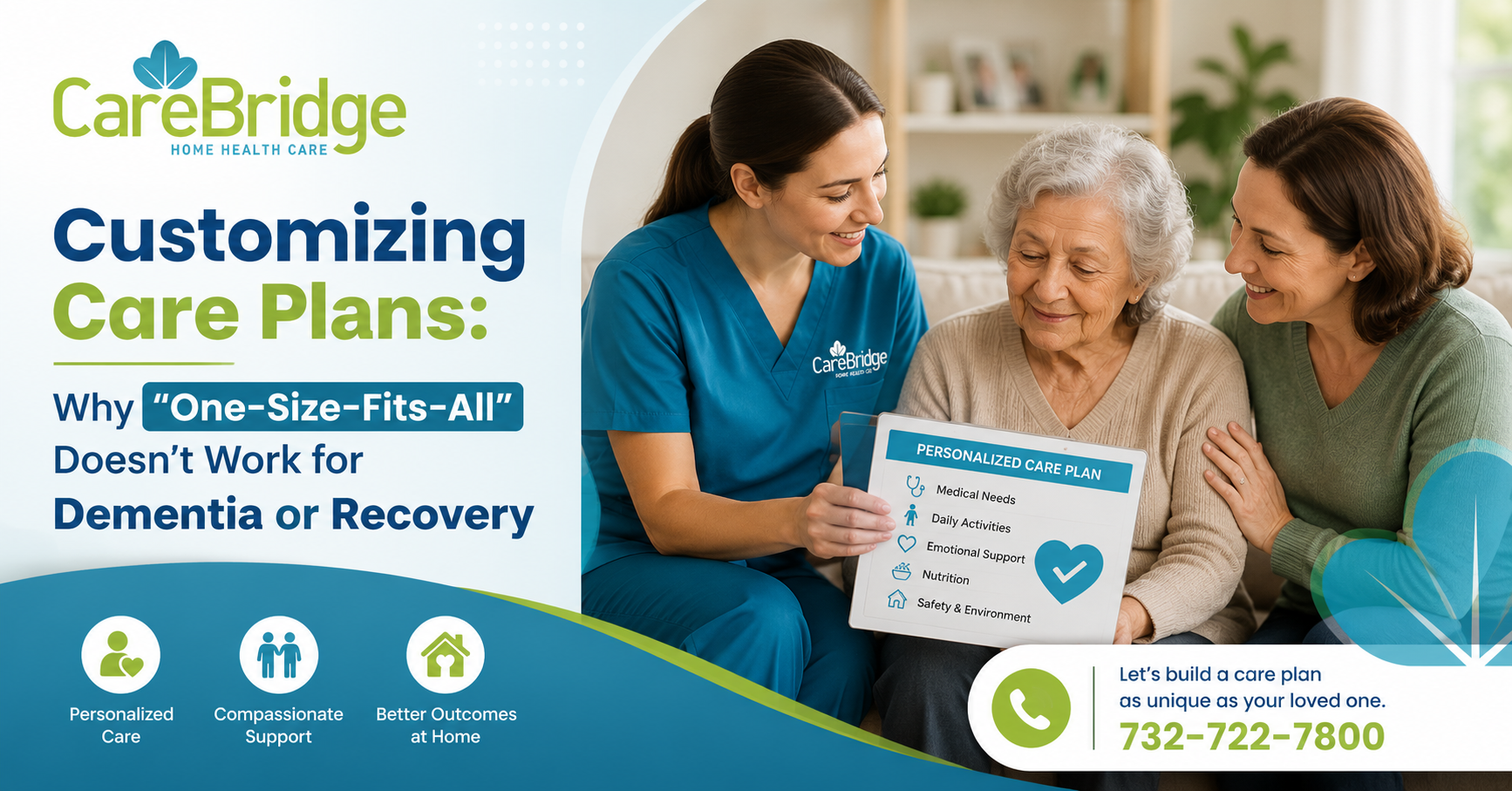
Customizing Care Plans: Why “One-Size-Fits-All” Doesn’t Work for Dementia or Recovery
Have you ever noticed how the advice in most health brochures sounds like it was written for a robot? They always give you this perfect, sterile checklist of “steps for recovery” or “standard dementia care” as if every single person on this planet experiences memory loss or post-surgery healing in the exact same way.
The truth, as any family caregiver will tell you over a cold cup of coffee, is that no two people are ever identical. Trying to force a generic, copy-pasted routine onto a complex individual is usually a recipe for total frustration and a whole lot of missed milestones.
When you’re looking at long-term support for a loved one, it’s really easy to get caught up in finding a service that just covers the basic boxes. But have you stopped to consider if those generic basics actually address your specific reality at home?
If your father is recovering from major hip surgery, his needs are vastly different from someone living with the daily fluctuations of early-stage dementia. Generic plans often ignore the personal history, the small quirks, and the specific daily rhythm that make someone feel like themselves.
The Hidden Costs of Generic Care Schedules
Ready to start planning your family’s adventure? Reach out to CareBridge for a free home care consultation today.
Consider the real complexity of dementia care, where the “best” approach changes not just from month to month, but sometimes from morning to late afternoon. A rigid schedule that demands a shower at exactly 9:00 AM might be the source of a massive, unnecessary conflict if your loved one is naturally a night owl.
Maybe they just aren’t feeling it on a Tuesday morning. Instead of a standard checklist, a real plan focuses on adapting to the mood, the environment, and the person’s immediate comfort level. That is the only way to maintain their dignity and peace of mind over the long haul.
It is honestly quite similar when you are managing recovery after a big hospital stay, where progress is rarely a straight line moving upward. One day, your mother might feel ready to tackle light kitchen tasks, and the next day, the fatigue of healing might be so heavy that she just needs someone to read a book with her.
If a caregiver is stuck following a rigid, one-size-fits-all script, they won’t be able to pivot to meet those changing physical and emotional needs. That can really slow down the recovery process or just cause a lot of unnecessary stress for everyone involved in the home.
Why Specialization Matters for High-Acuity Needs
This is exactly why we put so much weight on a deep, collaborative assessment before any aide ever steps through your front door. It’s not just about medical history or a dry list of tasks; it’s about understanding the person’s personality, their preferred routine, and even their favorite way to spend a quiet afternoon.
Whether you need a few hours of help a day or are looking for 24 hr care in Ocean County NJ to ensure constant stability, the goal is always to match the support to the person. We want the care to fit the life, not the life to fit the care.
If you are dealing with a situation that requires a more constant presence, like advanced memory support, you might be considering 24/7 care in Ocean County NJ to keep your loved one safe from wandering or just nocturnal confusion. In these scenarios, a standard plan is arguably dangerous.
It lacks the nuance required for high-acuity needs. A custom plan, however, creates a framework that anticipates their specific triggers—like sundowning or sudden irritability—and provides the caregiver with a map to de-escalate situations before they become actual crises.
Building a Plan That Fits Your Life
So, how do you find the right balance in all of this? It starts by asking the right questions during the planning stage, like “What time of day is the hardest for them?” or “What activity brings them the most joy when they’re having a bad day?”
These answers allow you to build a bridge between what they need clinically and what they need to actually feel happy and supported in their home. It is about honoring their history and their preferences rather than just checking boxes on a generic agency form that could apply to anyone.
It’s funny, sometimes the smallest details make the biggest difference. Maybe they like their tea a specific way, or they get agitated if the TV is too loud in the evening. A generic plan would miss that every single time. A custom plan built with the family? It thrives on those details.
At the end of the day, you aren’t just looking for someone to fill a shift; you’re looking for someone who understands that your loved one is an individual with a lifetime of stories. CareBridge works closely with families to ensure the plan of care is fluid, responsive, and always centered on what makes your family member comfortable and safe.