
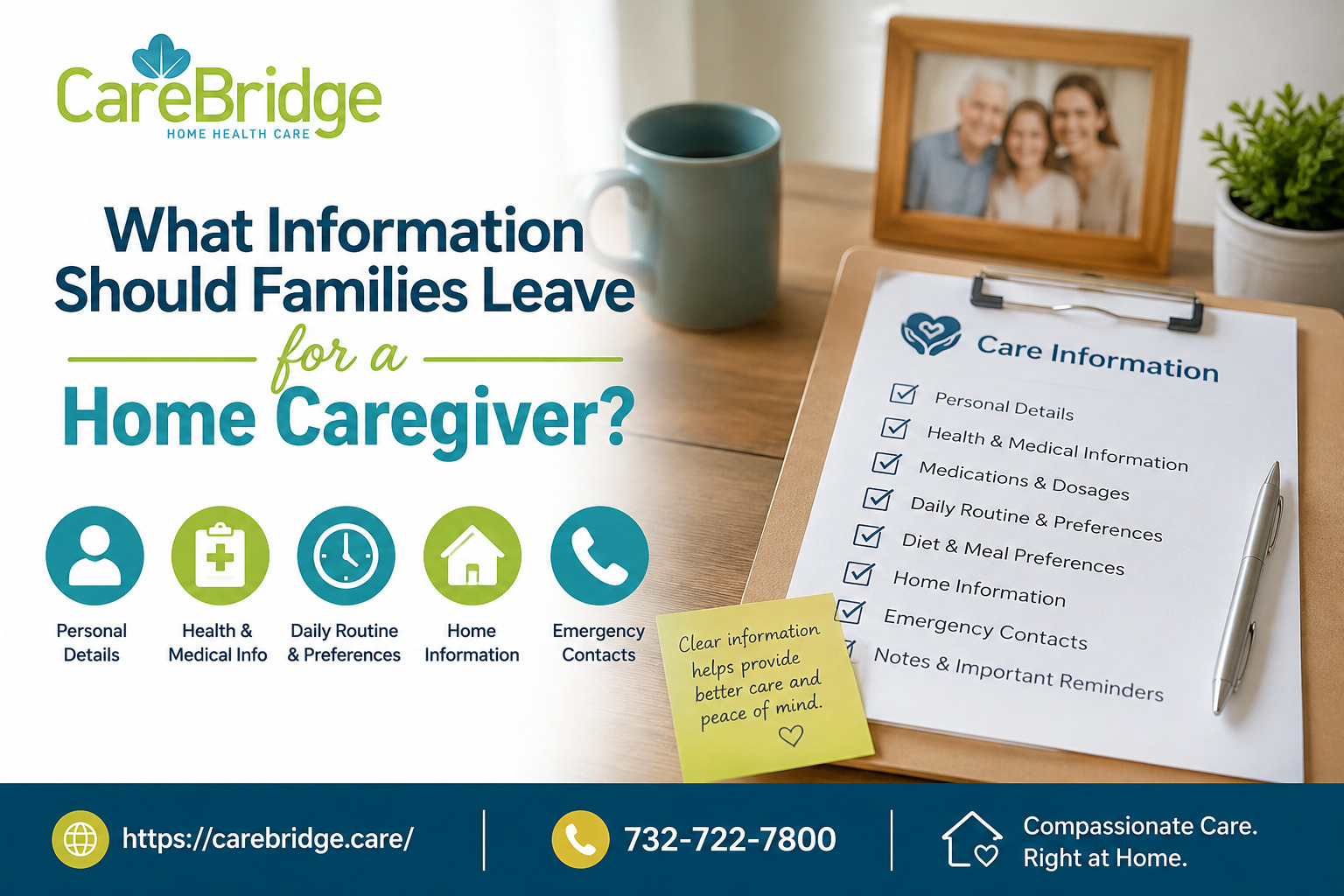
What Information Should Families Leave for a Home Caregiver?
“There’s food in the fridge. Just heat it up.”
That’s a perfectly normal thing to say when you’re rushing out of the house. But which container is lunch? Can Dad use the microwave himself? He usually says he can manage, even on days when standing for too long leaves him tired.
The caregiver has just arrived. They’re not going to know all this on their first morning, and you probably won’t remember every detail while looking for your car keys.
A home runs on dozens of little arrangements that nobody thinks to explain. When someone new comes in to help, those arrangements suddenly need explaining.

The fridge is a good place to start, actually. Leave a note about meals, dietary restrictions and anything your parent must avoid. If your mother has trouble swallowing certain foods, make sure the caregiver knows the prescribed food texture and any professional instructions. Don’t leave that to guesswork.
Then look at the rest of the house. Is the walking stick always beside the bed? Does Dad need help getting up from his favourite armchair? Is there a loose mat near the bathroom that someone keeps forgetting to remove? Point these things out. A quick walk around the house before the first visit can be more useful than a long written explanation.
The Information That Shouldn’t Live Only in Your Head
Medication instructions are a good example. You may know that your father takes one tablet with breakfast and another later in the day. But what happens when the routine changes, or you aren’t there to explain it?
Keep a current medication list with the prescribed doses and timings. Make clear what the caregiver is authorised to do, and check that the instructions match the latest advice from the healthcare professional. A scribbled note saying “morning medicine” isn’t enough.
The same goes for appointments. If a nurse is visiting on Thursday, write down the time. If your brother is collecting your mother for a doctor’s appointment, include that too. These things get missed when three family members are coordinating care through separate phone calls and messages.
And What If Nobody Answers the Phone?
This is worth sorting out before care begins.
Put your number on the contact sheet, but include another family member as well. Maybe you’re at work and can’t answer. Maybe your sister is travelling that week. Who should the caregiver contact next?
Write down the agreed emergency procedure and relevant healthcare contacts. If there’s a medical emergency, they should contact emergency services when necessary rather than wait for a reply from the family.
Keep It Practical, Not Perfect
You don’t need a thick folder full of instructions. A few pages in an agreed place will do, provided the caregiver knows where to find them. Include your parent’s normal routine, mobility needs, food restrictions, medication instructions and contact details. Keep sensitive information out of plain view.
For families arranging Home Health Care in Monmouth County through CareBridge, these details are worth discussing with the care team before visits start.
One final thought: ask the caregiver what they still need to know after the first few visits. They may have noticed a practical problem the family hasn’t thought about. And that’s fine. The notes should change as the arrangement settles in, not sit untouched in a drawer.