
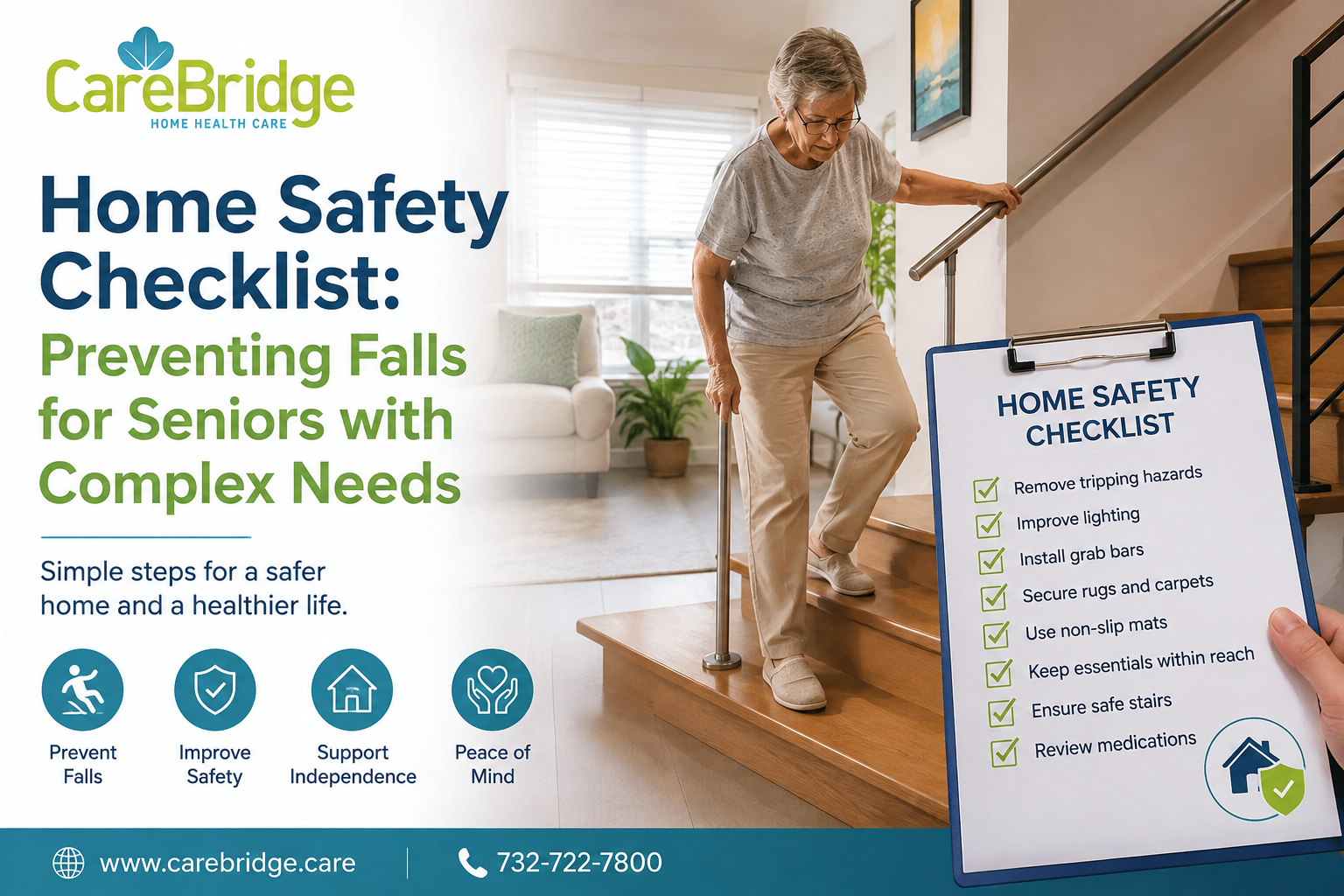
Home Safety Checklist: Preventing Falls for Seniors with Complex Needs
A fall can change life in an instant, especially for a senior living with conditions like Parkinson’s, advanced arthritis or diabetes. The usual advice—remove loose rugs or add a nightlight—is helpful, but it rarely tells the whole story. When mobility, balance and memory are all part of the picture, creating a safer home takes a little extra thought. That’s exactly where a practical room-by-room approach can make a real difference.

The Room-by-Room Breakdown (Where Falls Actually Happen)
Instead of trying to overhaul the entire house in one afternoon—which gets overwhelming fast—zero in on the three spaces where serious injuries occur most often.
1. The Bathroom: Your Highest Risk Area
The combination of wet tile, low seats, and hard porcelain makes the bathroom dangerous.
• Get rid of suction-cup grab bars immediately. They look convenient because you don’t have to drill into tile, but they give out without warning when a person puts their full body weight on them. You need wall-anchored, professional-grade bars right next to the toilet and inside the shower.
• Raise the seating height. Standard toilets are surprisingly low. Pushing up from that position takes significant leg strength, and that’s usually when a senior wobbles or loses balance. Installing a sturdy raised toilet seat with handles removes that strain.
• Address the tub ledge. Stepping over a high bathtub wall is a disaster waiting to happen for someone with stiff knees or poor balance. If you can’t afford a full walk-in shower renovation right now, place a wide transfer bench that extends over the tub wall so they can sit down first and swing their legs over safely.
2. The Bedroom: The Danger of Midnight Transfers
A lot of falls happen between 2:00 AM and 5:00 AM when someone wakes up disoriented or rushed to use the bathroom.
• Check the mattress height. If the bed sits too high, their feet dangle and they slide off awkwardly. If it’s too low, they have to heave themselves up, which causes sudden lightheadedness. Their feet should lay flat on the floor with knees at a comfortable 90-degree angle when sitting on the edge.
• Set up low-level motion lighting. Bright overhead lights blind someone waking up in the dark, but total darkness is just as bad. Stick motion-sensor LED strips along the baseboards pointing from the bedside straight to the bathroom door.
3. The Living Room & Hallways: Unnoticed Daily Traps
• Firm up the seating. Deep, plush couches look comfortable, but they are almost impossible for an elderly person to get out of without struggling. Swap them for firm armchairs with sturdy wooden armrests that give them real leverage to push off from.
• Watch the floor transitions. Wood-to-carpet thresholds, raised door sills, and trailing lamp cords are classic tripping points. Use heavy-duty tape on carpet edges or remove loose rugs entirely, and run cords strictly behind heavy furniture.
A Common Realization Families Face
“We fixed the rugs and put up grab bars, but my dad still stumbles when he stands up. Why?”
Fixing the physical space is only half the battle. When a senior has complex medical issues—like sudden blood pressure drops upon standing (orthostatic hypotension), nerve damage in their feet, or medication side effects—the house layout isn’t the primary trigger. The balance loss is coming from inside their body. In those situations, no amount of grab bars can replace having a trained person right there to physically steady them during transfers.
Matching the Right Care to Your Situation
Once you realize physical fixes aren’t enough, it’s time to look at hands-on assistance. Depending on how much help your parent needs throughout the day, professional agencies offer different levels of support:
• Short Hourly Shifts: Great for specific times of day where fall risks spike—like getting out of bed, taking a morning shower, or navigating the kitchen around dinner time.
• Dedicated Daily Assistance: Bringing in a certified Home Health Aide in NJ means there’s a trained professional watching how your parent walks, helping them move from room to room, managing their medication schedule, and keeping walkways completely clear of clutter.
• Continuous 24/7 Coverage: If your parent has dementia, wanders at night, or has severe physical limitations, hiring a Live in Home Aide in NJ ensures someone is awake and present whenever they try to get up, preventing those terrifying middle-of-the-night falls.
How CareBridge Home Health Care Steps In
When physical limitations make staying at home unpredictable, you need more than a generic checklist—you need a real team behind you.
At CareBridge Home Health Care, we know that no two home setups are the same. That’s why every care arrangement starts with a thorough, free home assessment conducted directly by a Registered Nurse (RN). Our Director of Nursing looks at your parent’s health conditions, evaluates their mobility, audits the home environment, and builds a customized care plan tailored specifically to their routines.
As one of the most trusted Private Home Care Agencies in NJ, we don’t use independent contractors. We directly employ, thoroughly screen, and closely supervise all our certified aides. Our RNs perform ongoing visits to adjust the care plan as your parent’s health changes, giving your family true relief and safety.